 01 / Project development
Preparing an
important submittal?
Review a planning, environmental or design package before submission.
- Planning or funding package
- Environmental document
- Design submittal

Infrastructure risk intelligence
Review plans and project records, examine concerns in context, and give your team a clearer basis for its next decision.
From early planning to project delivery.
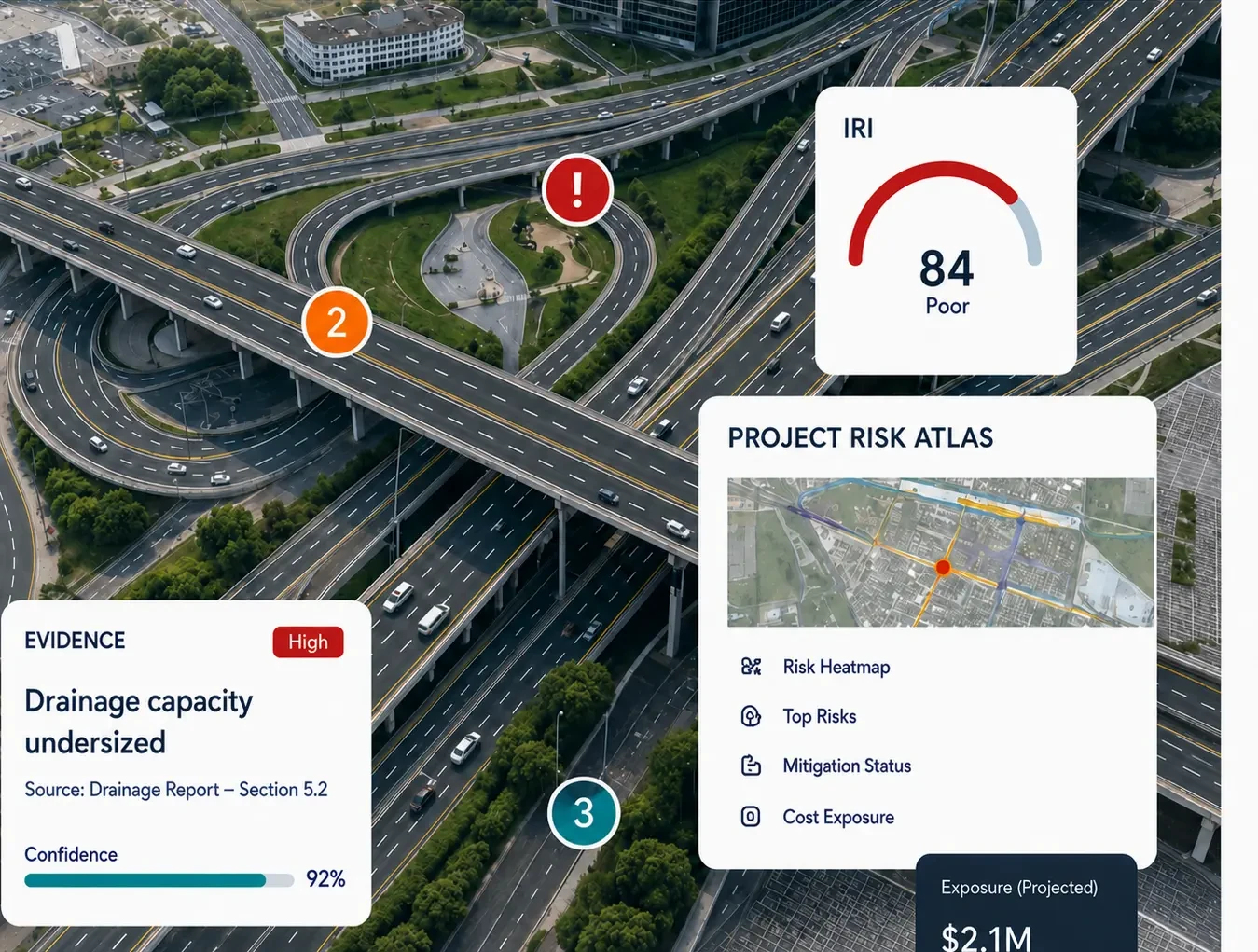
Start with your next decision
01 / Project developmentReview a planning, environmental or design package before submission.
 02 / Public investment
Give staff and elected officials a clearer basis for funding discussions and responsible use of taxpayer resources.
 03 / Ongoing delivery
Bring new records, open concerns and documented actions into the next risk review.
A clearer path from documents to decisions
Define the source package, versions and review scope.
Surface candidate concerns for screening and review.
Examine the evidence and resolve selected questions.
Brief the team and document decisions and follow-up.
Illustrative sequence · Fictional records and concern, not a Keller finding or a live analysis.
Proposed connection identified.
Rev 1 · IncludedConnection verification requested.
Rev 1 · IncludedCapacity confirmation needed.
Not supplied in this exampleConnect proposed drainage to the receiving system.
Confirm receiving capacity before finalizing the connection.
The supplied sample package has a proposed connection but no receiving-capacity check.
Requires engineering reviewThe sample plan and note identify the intended connection and a verification requirement.
Without the capacity check, adequacy cannot be concluded.
Review outcome: request supporting informationIntended workflow. An AI-generated candidate is not automatically a defect; review and release requirements follow the engagement scope.
What your team receives
Explore this Keller 3D heat-map sample, then discuss the source evidence and engineering review needed for your project.
Illustrative examples: sample issues, locations and priorities; not validated engineering findings.
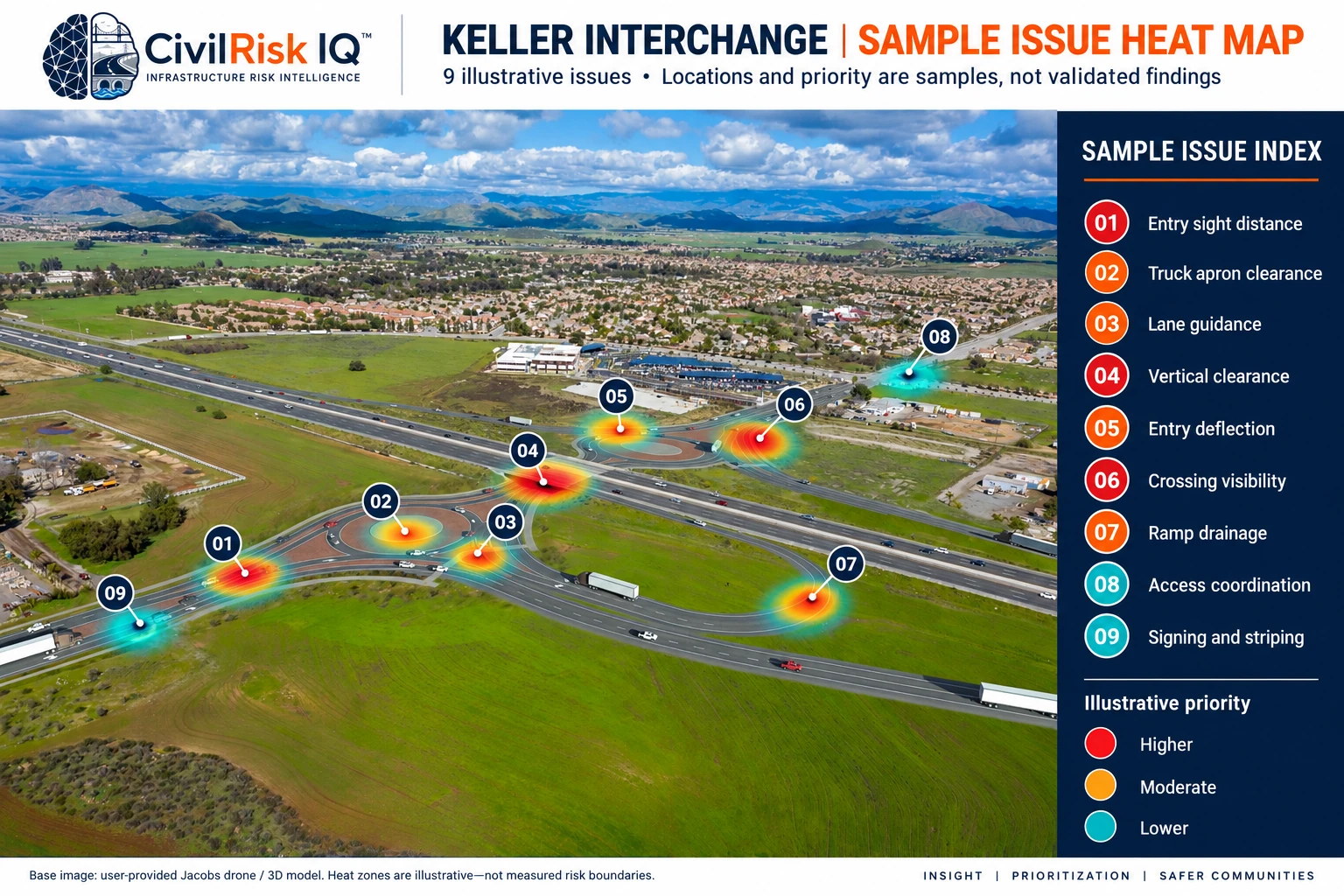
A released finding should identify its supporting source and what that source establishes. This illustrative heat map is a presentation sample, not source proof.
The sample does not establish actual defects, verified locations, cost exposure or risk reduction. Those require supporting records and engineering validation.
A project-specific review would document the decision, reasoning and next action. No engineering adjudication is represented by this sample.

35 years of civil engineering experience
Jason Bennecke, PE, MBA, PMP brings 35 years of civil engineering experience to the conversation—including serving as CEO of Southstar Engineering & Consulting, Inc. and successfully delivering 15 major transportation interchanges.
Leave the conversation understanding a suitable review scope, the documents needed and the next steps for your team.
Confidence starts with clarity
We’ll walk your team through document sharing, authorized access and the security information your organization needs.
A conversation with the founder
Complimentary 20-minute consultation with Jason Bennecke, PE, MBA, PMP.
For AEC pursuits and project delivery
Before the proposal. Before the interview. Before you commit to an approach.
Use a scoped review of available project records to understand consequential risks and explain how your team would respond.
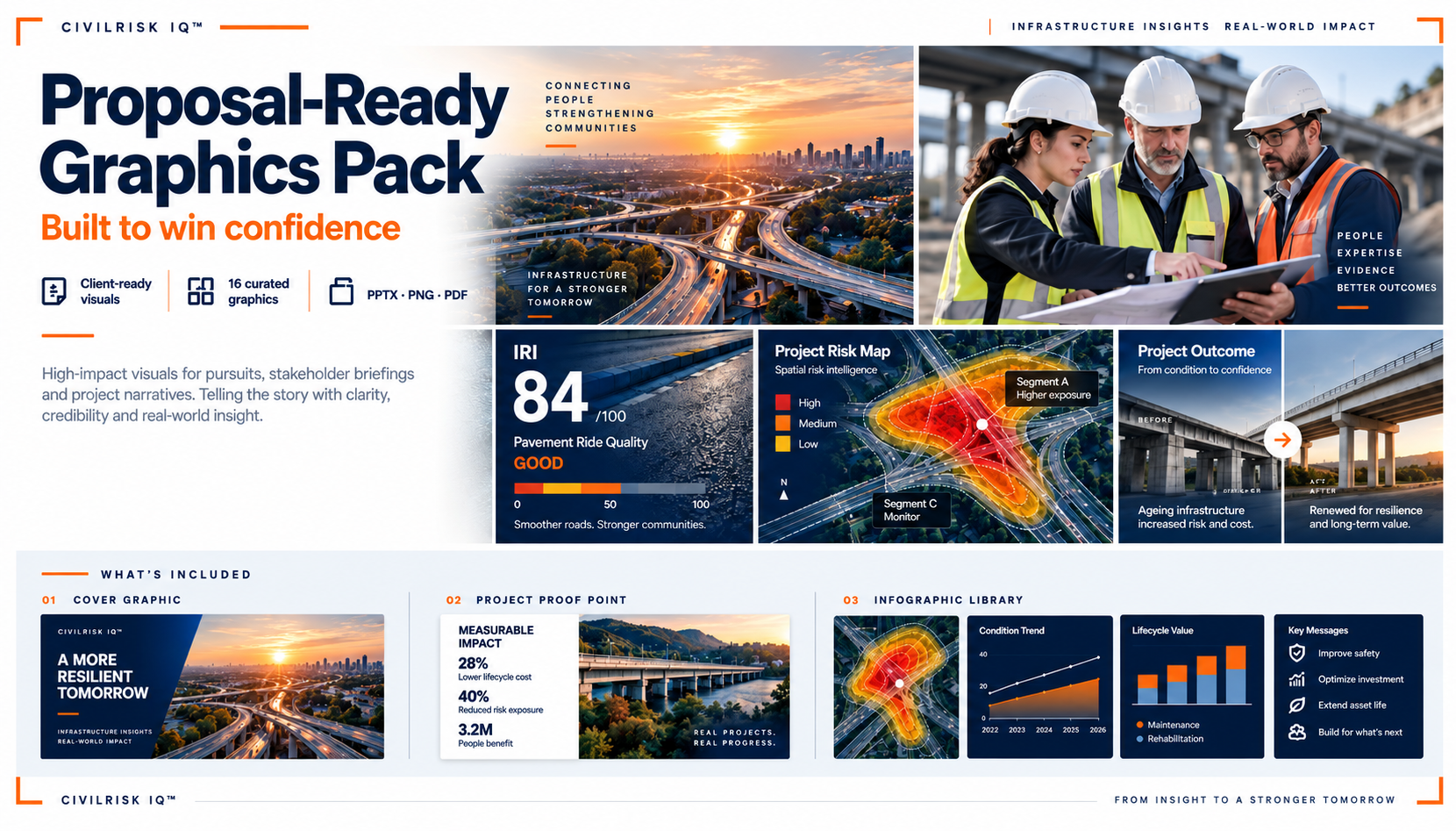
Make the proposal specific to this project
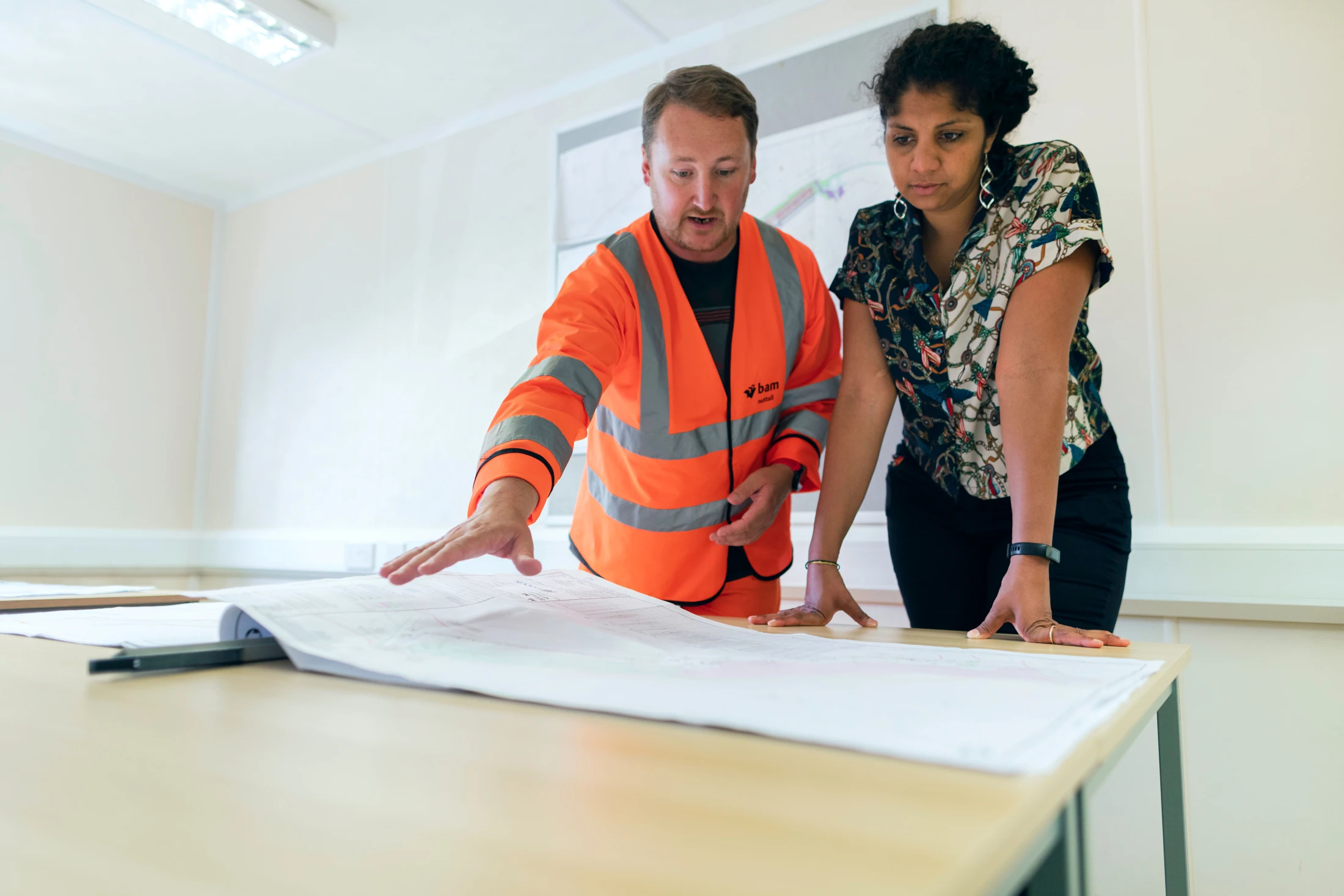
Connect supported project risks to coordination, staffing assumptions and proposed controls.
Equip your team with clear talking points, evidence and thoughtful questions for the owner.
Examine scope and schedule dependencies before committing to the proposed approach.
Turn insight into pursuit materials
Choose the deliverables around your submission and interview needs.
Illustrative sequence · Fictional records and concern, not a Keller finding or a live analysis.
Confirm the receiving system before final design.
Format reference. The image is a separate design concept, not a rendering of Sample A.
The sample package identifies a connection but does not include the receiving-capacity check.
Which receiving-system records can be made available for design coordination?
Proposed response: obtain the records, review capacity, and document any required follow-up.
Format reference. The image is a separate design concept, not a rendering of Sample A.
Use the same concern identifier in the map and supporting register.
Format reference. The image is a separate design concept, not a rendering of Sample A.
Preformatted risk graphics and concise summaries for your proposal.
Focused content for your approach, proposed responses and owner questions.
Show supported risks by location where localization is verified and the output is available.
Report design concepts from the supplied suite. Sample metrics are illustrative. Agree formats and available outputs during scoping; review and approve material before submission.
Source evidence, a clear explanation and a documented review decision give your proposal material substance.
Explore the evidence example →Illustrative examples: sample issues, locations and priorities; not validated engineering findings.
Pursuit insight that carries forward
Carry documented concerns into coordination, milestone reviews and ongoing construction risk review as project information changes.
Agree document permissions, scope and recipients. Your team approves proposal commitments and engineering conclusions. A stronger risk narrative does not guarantee an award.
Confidence starts with clarity
We’ll walk your team through document sharing, authorized access and the security information your organization needs.
A conversation with the founder
Complimentary 20-minute consultation with Jason Bennecke, PE, MBA, PMP.
For public agencies • from planning through construction
Bring plans, project records and unresolved concerns into a clearer conversation about priorities, funding and the next decision.
Give your staff, council or board a record they can examine: what is supported, what remains uncertain and what needs attention.
Complimentary 20-minute call with Jason. Three quick questions. About one minute.
What needs attention before the next milestone?
What does the evidence support?
What should be resolved before committing funds?
A shared record for different responsibilities
Examine source-supported concerns and identify the calculations, coordination or revisions needed next.
Evidence & follow-up.
Organize priorities, dependencies and assigned actions so unresolved questions remain visible through delivery.
Actions & milestones.
Understand the basis for funding requests, the choices ahead and the uncertainties that could affect public investment.
Funding & accountability.
Before the next funding decision
A scoped management brief can help staff explain the issue, its supporting record and the decision requested.
Bring the supporting records, unresolved concerns and available options into one briefing—so staff can explain what needs attention, why it matters and what action is requested.
Illustrative sequence · Fictional records and concern, not a Keller finding or a live analysis.
The sample records identify a drainage connection and require receiving-capacity verification.
The sample records identify a drainage connection and require receiving-capacity verification.
The receiving-capacity check has not been supplied. Adequacy remains unconfirmed.
The sample records identify a drainage connection and require receiving-capacity verification.
The receiving-capacity check has not been supplied. Adequacy remains unconfirmed.
Ask the design team for the check and assign a technical reviewer before finalizing the connection.
What your agency receives
Engagement deliverables are tailored to your project, with scope agreed during consultation. The examples below illustrate how information can be organized for your team.
Attention needed
A concern requiring staff direction.
Supporting record
Source reference and open questions.
Action requested
Next step and responsible party.
Priorities, supporting evidence and decisions requested—organized for staff, leadership and council or board briefings.
Keep the reference, review decision and next action together.
Source references, review status and recommended follow-up—so technical teams can inspect the basis and coordinate next steps.
Carry unresolved questions into the next review.
Changes since the previous review, unresolved concerns and action tracking—when ongoing service is included in the engagement.
Illustrative content structures, not project results. Deliverable formats, review cadence and responsibilities are agreed for the engagement.
We’ll walk you through it
You do not need to assemble every project file before we talk. Start with your project and the decision ahead; we’ll help define the next steps.
Use the complimentary call to discuss the project, your questions and whether a scoped review fits.
Review a digital proposal covering deliverables, needed records and your agency’s procurement process.
Work through a simple intake checklist. Confirm permissions and the approved upload route with our team.
Receive the agreed materials, discuss open questions and establish the appropriate follow-up.
Proposed onboarding experience: online forms, step-by-step guides and drag-and-drop uploads. Availability of each workflow will be confirmed before engagement.
Your agency’s requirements matter
We’ll help your IT and procurement teams identify the access, data-handling and security documentation they need before project records are shared.
Ask about encryption, hosting, retention and authorized access. Applicable controls must be confirmed for the proposed engagement.
A conversation with the founder
Discuss your project with Jason Bennecke, PE, MBA, PMP—35 years of civil engineering experience, including delivery of 15 major transportation interchanges.
Complimentary 20-minute consultation.
Three quick questions. About one minute.
Evidence into decisions
Review plans and project records, examine concerns in context, and organize the evidence your team needs for engineering review.
Start with your project and the decision ahead.
The review lifecycle
Define the files, versions, review boundary and missing inputs.
Organize candidate concerns and the source references needed to examine them.
Examine support, resolve exceptions and document the review decision.
Connect reviewed concerns to agreed reports, actions and follow-up.
Intended review workflow. An AI-generated candidate is a question for screening and review, not automatically a defect.
See the context
A map can orient the conversation. The underlying source records and professional review establish whether a concern is supported.
Explore the Keller sample →Inside a review record
References a document revision.
Lists a different revision.
The comparison prompts review of which versions govern.
The two supplied references differ. Both exact references should be preserved in the review record.
Which revision controls, and whether the difference affects the work.
Confirm the governing records before concluding there is a coordination gap or assigning follow-up.
One project record. Different conversations.
Source context, candidate concerns and documented reasoning.
Understand the review process →A proposed place for released reports and engagement documents.
Explore the proposed workspace →Priorities, remaining questions and the decisions requested.
Explore report deliverables →A guided start
We’ll walk through document permissions, authorized recipients and the security information your IT team needs before records are shared.
Discuss security & data handling →Discuss the scope with Jason
Complimentary 20-minute consultation with Jason Bennecke, PE, MBA, PMP.
Three quick questions. About one minute.
Engagement deliverables
Bring reviewed project information into clear materials for technical teams, leadership, proposals and project briefings.
Scope, formats and available outputs are agreed during consultation.
Start with the decision
For owners and technical teams
What needs attention?
The concern and why it matters.
What is still open?
Uncertainty, dependencies and required input.
A concise briefing on priorities, supporting evidence, limitations and decisions requested.
Evidence in context
Page references and relevant comparisons.
Documented judgment
Reasoning, open questions and next action.
Source-supported observations and engineering questions, organized for inspection and follow-up.
For proposals and presentations
Preformatted risk graphics and concise summaries for the agreed proposal or funding submission.
Focused talking points, proposed responses and owner questions for the conversation ahead.
Location-based presentation of supported concerns where localization has been verified.
Supplied design concepts. Sample counts and metrics are illustrative; they do not demonstrate project results or guarantee an award.
For ongoing project oversight
Source cutoff and open concerns.
Changed records and review decisions.
Remaining questions, owners and actions.
Changes since the prior review, unresolved concerns and action status at an agreed cadence.
The Infrastructure Risk Index, its assessment basis and relevant changes. Outcome statements require documented support; an index alone does not prove avoided cost.
Additional formats to discuss
Connect findings to decisions and documented outcomes.
Transfer findings and provenance in agreed data formats.
Organize candidates for human review and possible inclusion in the risk register.
This catalog describes proposed engagement outputs. Confirm availability, formats and scope during consultation. This page does not provide self-service report generation.
A guided start
We’ll walk through document permissions, authorized recipients and the security information your IT team needs before records are shared.
Discuss security & data handling →Discuss the scope with Jason
Complimentary 20-minute consultation with Jason Bennecke, PE, MBA, PMP.
Three quick questions. About one minute.
Illustrative report graphic
The proposed interchange model over an aerial base, with nine illustrative issue markers.
These descriptions explain the illustrative topics shown in the image. They are review questions, not engineering conclusions about Keller.
Review question: can approaching drivers see conflicting traffic in time?
Review question: is space for the intended vehicle path supported by the proposed geometry?
Review question: are lane assignments and intended movements clear?
Review question: is the available clearance supported by the relevant plans and dimensions?
Review question: does the proposed entry geometry guide the intended approach?
Review question: can road users see and respond to the crossing?
Review question: how does runoff move through the ramp area?
Review question: are adjoining access needs coordinated with the project?
Review question: do signs and pavement markings communicate the same movements?
Illustrative report graphic
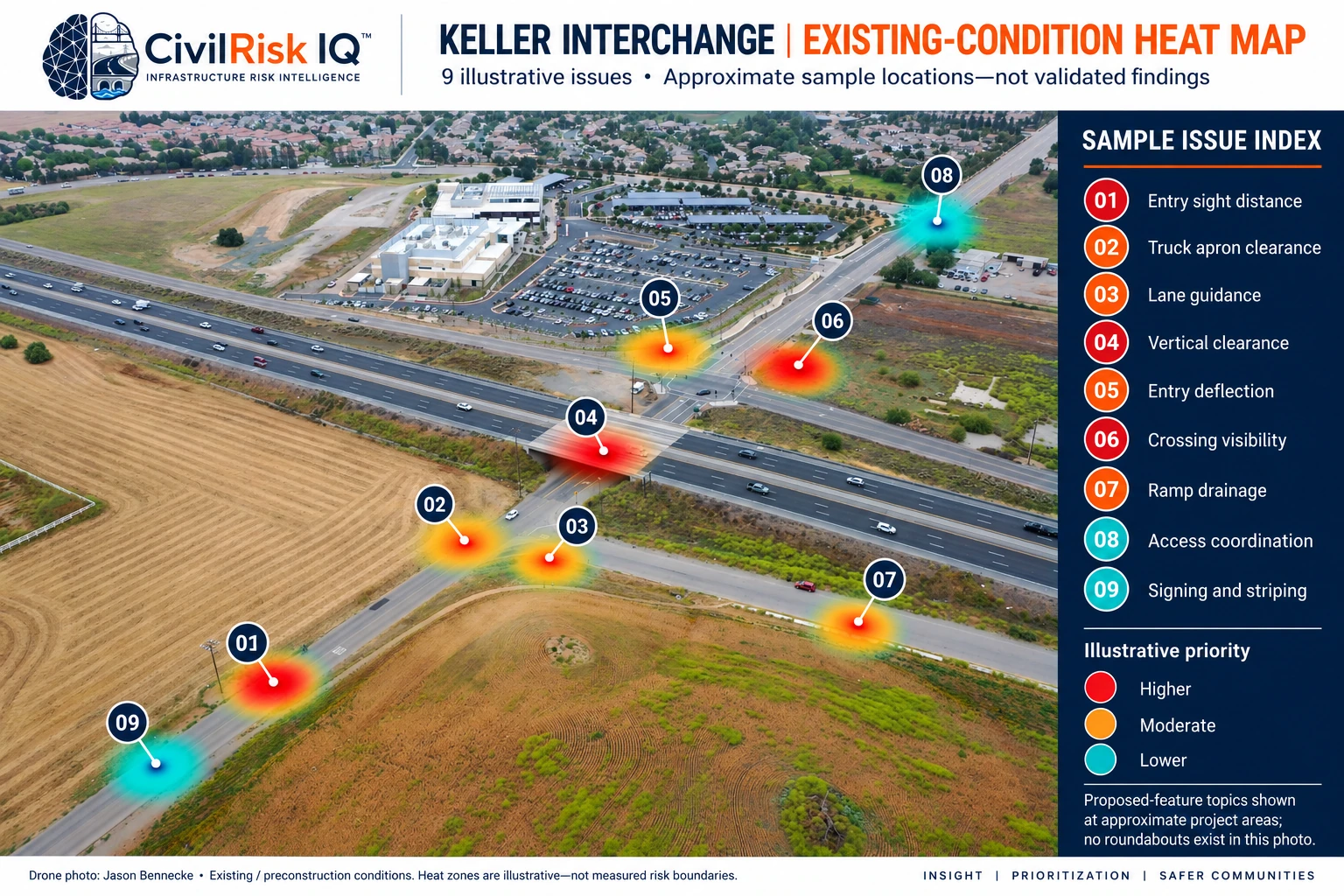
The existing-condition drone photograph with nine illustrative issue markers. Proposed-feature topics are placed at approximate project areas; no roundabouts exist in this photo.
These descriptions explain the illustrative topics shown in the image. They are review questions, not engineering conclusions about Keller.
Review question: can approaching drivers see conflicting traffic in time?
Review question: is space for the intended vehicle path supported by the proposed geometry?
Review question: are lane assignments and intended movements clear?
Review question: is the available clearance supported by the relevant plans and dimensions?
Review question: does the proposed entry geometry guide the intended approach?
Review question: can road users see and respond to the crossing?
Review question: how does runoff move through the ramp area?
Review question: are adjoining access needs coordinated with the project?
Review question: do signs and pavement markings communicate the same movements?